|
Getting your Trinity Audio player ready...
|

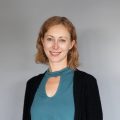
These days, San Ramon teen Aditi Polamreddy spends her time traveling, roller skating competitively, and engaging in drama and leadership opportunities when school is in session – a welcome reality following months as a child spent in hospital beds and unable to walk due to an early brain cancer diagnosis and its aftermath.
“She is resilient, also very persistent when it came to skating,” her mother Swetha Polamreddy said in an interview with DanvilleSanRamon.com. “We went to Golden Skate for a birthday party when she was 11 or 12. She held that little stand thing that kids use. She was too tall for it, but she still tried to and she fell a hundred times.”
“So she came back next week, and the week after,” Swetha continued. “She kept falling – there was no coach. She fell like a hundred times and she never gave up. Then somebody walks up to her and says ‘I’ve been watching her from a distance and I’m a coach.'”
While the Golden Skate coach the pair met that day initially sought to help the younger Polamreddy realize her potential amid her physical limitations, the encounter and subsequent years of training yielded another competitive skater out of the popular Tri-Valley skating rink
“David is still my coach now,” Aditi said. “I just recently started competitive skating. I’m able to jump on skates; I’m able to spin, and David keeps on pushing me which is also really nice.”

Learning to roller skate – and excelling at it – is one of the many ways Aditi has exceeded the expectations of professionals and her parents following nearly a lifetime of battling a brain tumor that was diagnosed in her early life and went on to have repercussions throughout her childhood.
“She’s one of the people who are super easy, free-spirited, and kind and generous, one of those people who’s very easy to get along with,” Swetha said. “She obviously has a lot of friends. She has a lot of adults who adore her both in the family and outside of school. Any other child, I think the journey would have been super hard.”
That journey started when the Polamreddys took their daughter for a routine checkup when the family had moved back to India, seeking to settle down and begin their lives in the country as a family after studying and working in the United States.
“We had life happening – nothing major, just life – and around that time we had a regular physical checkup,'” Swetha said. “I brought up ‘oh, I think she’s a lefty, she uses her left hand more.’ It was a new doctor. She looks at her and she goes ‘oh there is something happening on the right side. I’m pretty sure there’s a mass on the head.’ That was out of the blue, just a regular physical checkup.”
Swetha drove her 4-year-old daughter straight from the appointment to another doctor’s office for an MRI screening, where the presence of a mass on her head was confirmed, identified on the right side of her brain and explaining why she was favoring one side.
“I do remember I was scared, but I also didn’t know anything about what was going on at the time, because I never heard of an MRI machine; I never heard of a brain tumor or anything,” Aditi said.
While Swetha noted that the process for getting an MRI in India is much simpler, without a months-long wait like is generally the case in the United States, the family decided the next day to move back to America to seek the best care possible for their young daughter.
“Both me and my husband had lived and studied in the U.S., and he had lived and worked in the U.S.,” Swetha said. “While it might have some issues, we were also more confident about how it was going to go so we made the decision to move back.
Approximately three weeks after her diagnosis, Aditi underwent her first brain surgery in Boston.

“They went seven centimeters deep into the head, because this brain tumor was right on top of her brain stem,” Swetha said. “They got 90% out. In some cases it doesn’t grow back, but in some cases it grows and then we have to do chemo.”
While the surgery had aimed to eliminate the tumor, with her family and medical professionals hoping that might be the end of the road for treatment, it left Aditi paralyzed.
“She couldn’t even talk,” Swetha said. “She couldn’t even move from left to right on the bed.”
The family stayed in Boston during the rehabilitation process, during which Aditi successfully relearned how to sit, stand, walk and talk, then started looking for somewhere to settle down, ultimately deciding on San Ramon.
“East San Ramon, the older San Ramon, I felt like it was a beautiful place and the school district was very good, so that’s why we moved to San Ramon,” Swetha said.
While everything seemed normal, Aditi’s next MRI showed that the tumor was beginning to grow back, with chemotherapy being the next step in treatment.
“At that point, I couldn’t, as a mom, just sit down and say ‘that’s it, let the chemotherapy take its course,'” Swetha said. “It’s a 14-month protocol of chemo, every week for 14 months, and during that time she might need blood transfusions.”
Swetha began researching ways to maintain her daughter’s health amid the chemotherapy process with the goal of preventing potential blood transfusions and keeping her as strong as possible during the treatment.
During one late night of research days before the chemotherapy process was set to start, Swetha came across a documentary film that explored the possibility of a ketogenic diet for aiding not just athletic performance, but addressing illnesses such as cancer. She ultimately connected with the nonprofit organization MaxLove Project, founded by Audra and Justin Willford with the goal of providing culinary medicine, emotional health support, and community for families contending with pediatric cancers and rare diseases.
The day before her daughter’s first chemotherapy treatment, Swetha decided to start her daughter on a ketogenic diet.
“She was an easy child,” Swetha said. “I would feed her just cream cheese pancakes, or I would make bread out of coconut flour and almond flour. She just made it so easy.”
Aditi said that it was her mother who had made the diet easy, going out of her way to find foods and create recipes that tasted as much as possible like what her friends and family were eating, prior to the current popularity of ketogenic diets and an array of products on the market.
“I wouldn’t be able to do this journey without MaxLove Project,” Swetha said. “This was at a time in 2016 when the ketogenic diet was still very new. We made our own ice cream, so we did everything from the ground up at home and figuring out recipes – there were no recipes either.”
“We had just spent so much and overnight moved here, so we were reaching our limits,” she added. “They made things easier for me – I had a community. I didn’t have my parents; I didn’t have a sibling – I had friends, but nobody in a way that could support me like Audra and Justin.”
Within two months, Aditi’s recovery was exceeding doctors expectations with 40% of the tumor gone by that point and 98% gone by the end of the 14-month chemotherapy process – with doctors believing that the remaining 2% is only scar tissue.
Following the treatment and positive outcome, Aditi relished the fact that she wouldn’t have to miss any more days of school, but continued on a ketogenic diet until 2022 – selling Girl Scout cookies for approximately six years without being able to taste them.
“I think the transition from a keto to a regular diet was easier for her, but it was really hard for me,” Swetha said. “Now I have to let go – not just let go, but let go in a way that she was just going to be a regular kid.”
The Polamreddy family wasn’t entirely out of the woods, however, with the early tumor and surgeries having had an impact on Aditi’s physical growth and development, leading to a surgery on her leg and a months-long stint in a wheelchair while she was in eighth grade over the past academic year – after her first foray into roller skating.
Nonetheless, Aditi is up and about once again and poised for her first days at California High School on Aug. 14, spending the summer back in India with her mother on an Ayurvedic wellness retreat.

For her part, Swetha is seeking to give back to MaxLove Project and provide support to parents facing childhood cancer, aiming to contend with the isolation she felt in the earlier days of her family’s experience, having been trained under the organization’s “Mommy Mentor” program to talk to parents in the wake of critical diagnoses and provide support.
“I would just say it’s OK to feel scared,” Swetha said. “It’s a scary thing, but just keep going on. Someone somewhere in the world gets you right now, and you might not know them, but just knowing that they’re going through something like you are, or someone has or will, so you’re not alone.”
The Polamreddys are also seeking to give back to MaxLove Project by promoting its 10th annual Farm to Fork App-Off. More information is available at givebutter.com.
 Florida real estate firm buys Pleasanton Gateway Shopping Center for $79.1 millionOctober 13, 2026 2:01 pm